





 0
0
 0
0
Read Time:5 Minute, 27 Second
You know that feeling you get when you sink into a cozy chair by a sunlit window, or the calm that washes over you in a room filled with plants? That’s not just a fluke. It’s a deep, hardwired human need to connect with nature. And honestly, it’s what biophilic design is all about.
Biophilic design isn’t just about adding a potted fern in the corner—though that’s a great start. It’s a holistic approach to weaving nature’s patterns, materials, and experiences into our built environments. And here’s the deal: your furniture choices and where you put them are arguably the most personal and powerful ways to make this connection. Let’s dive into how you can bring the outside in, starting with what you sit, sleep, and dine on.
The Core Idea: More Than Just “Green” Decor
First, a quick clarification. Biophilia means “love of life.” So biophilic design focuses on satisfying that innate attraction. It tackles three key areas: Direct Nature (actual plants, light, water), Indirect Nature (natural materials, images of nature), and Space & Place (the spatial arrangements found in nature).
Your furniture sits—quite literally—at the intersection of all three. A wooden table is indirect nature. A chair positioned to catch the morning light engages direct nature. The flow of your room layout? That’s all about spatial experience.
Selecting Furniture with Nature in Mind
Choosing pieces is where the magic begins. It’s about moving beyond synthetic, perfect, and mass-produced toward items that tell a story and engage the senses.
1. Materiality is Everything
Forget cold, plasticky finishes. Seek out materials that are inherently natural and tactile. Think:
- Solid Wood with visible grain, knots, and variation. Oak, walnut, teak. Each tells a different story of growth.
- Natural Stone like marble or slate for tabletops—cool to the touch, uniquely patterned.
- Organic Fibers: Linen upholstery, jute rugs, rattan, cane webbing, wool throws. These materials breathe and have a comforting texture.
- Leather that ages and develops a patina, reminding us of time and use.
The key is imperfection. A slight warp, a color variation, a unique vein in the stone—these aren’t defects. They’re proof of life.
2. Shapes and Forms Inspired by the Natural World
Nature rarely does straight lines and sharp 90-degree angles. Look for furniture with organic, flowing shapes.
Consider a sofa with soft, rounded edges that mimics a smooth river stone. Or a coffee table shaped like an amorphous, free-form blob (they call it “organic modern” for a reason). Look at the legs of a chair—do they branch out like a tree? These subtle cues subconsciously connect us to natural forms.
3. Color Palettes Drawn from Earth and Sky
Ditch the neon and the harsh primaries. Biophilic color schemes are muted, earthy, and evocative of landscapes.
| Inspiration Source | Color Examples | Furniture Application |
| Forest Floor | Mossy greens, rich browns, charcoal | Upholstered armchair, cabinet stain |
| Desert & Stone | Sandy beiges, terracotta, slate grey | Sofa fabric, stone side table |
| Ocean & Sky | Soft blues, misty greys, seafoam | Accent chair, area rug undertones |
These colors are inherently calming. They provide a restorative backdrop, letting the mind rest.
The Art of Placement: Creating Natural Flow and Prospect
You could have the most beautiful natural furniture, but if it’s arranged in a harsh, grid-like way, you’re missing the point. Placement is about recreating the spatial experiences we crave.
1. The “Prospect and Refuge” Dynamic
This is a huge one. In nature, we feel safest when we have a sheltered spot (refuge) with a clear view of our surroundings (prospect). You can create this at home.
- Refuge: Position a high-backed, cozy chair or a deep sofa in a corner, or against a solid wall. Add a soft throw. This creates a sense of security.
- Prospect: Ensure that seat has an unobstructed view of the room’s entrance or a window. Never put your main seating with its back to a door or a beautiful view. It triggers low-grade anxiety.
2. Fostering Movement and Discovery
Nature isn’t a grid. Arrange furniture to encourage a gentle, meandering flow. Avoid pushing all pieces flat against the walls. Use area rugs to define conversational groupings that feel organic, not rigid. Create little “moments” of interest—a reading nook by a shelf of plants, a bench at the foot of a bed facing a window.
3. Honoring Light and Shadow
This is crucial. Place key furniture to maximize natural light and the play of shadows throughout the day.
- Put your desk or favorite reading chair perpendicular to a window, not directly facing the bright glare.
- Use a sheer, natural-fiber curtain to diffuse light, creating dappled shadow patterns reminiscent of light through leaves.
- Place a textured object, like a rattan screen, between a light source and a wall to cast interesting, nature-like shadows.
Bringing It All Together: A Room-by-Room Glimpse
Let’s get practical. How does this look in real life?
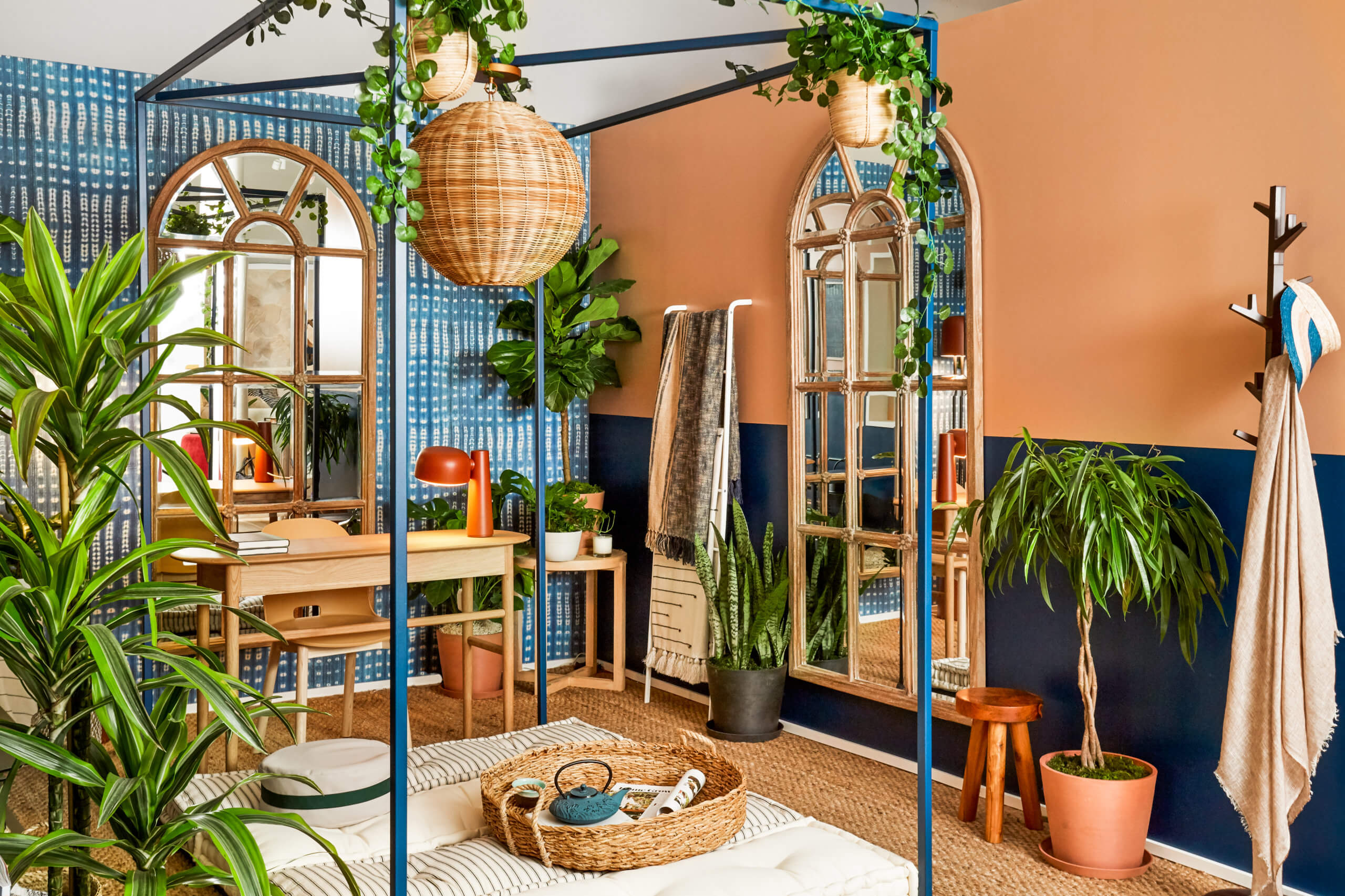
The Living Room: A linen sofa in a soft clay color faces a large window. A live-edge wood coffee table sits centrally. Behind the sofa, a large fiddle-leaf fig tree. Chairs are angled for conversation, not just lined up. The layout invites you in and lets you breathe.
The Bedroom: A woven cane headboard. Bedside tables are mismatched wood stools. The bed is positioned to see the door (prospect) but feels nestled (refuge). Morning light filters through bamboo blinds onto a wool rug.
The Home Office: A solid wood desk is placed to the side of the window. A comfortable, ergonomic chair with natural fabric. Shelving above holds books, but also trailing pothos plants and a small stone collected from a hike. It’s a space for focus, but not isolation.
The Payoff: Why Bother with All This?
Sure, it takes more thought than just buying a matching set. But the benefits are real and backed by science. We’re talking reduced stress, improved creativity, better air quality, and a profound sense of well-being. Your home stops being just a place you live and starts being a place that nurtures you.
In the end, integrating biophilic design through your furniture isn’t a trend or a strict set of rules. It’s a mindset. It’s about choosing pieces that feel alive and arranging them in a way that feels… human. It’s remembering that before we built shelters, we lived in the world. And our souls still long for that connection, even from the comfort of our favorite chair.


Happy
0 %

Sad
0 %

Excited
0 %

Sleepy
0 %

Angry
0 %

Surprise
0 %